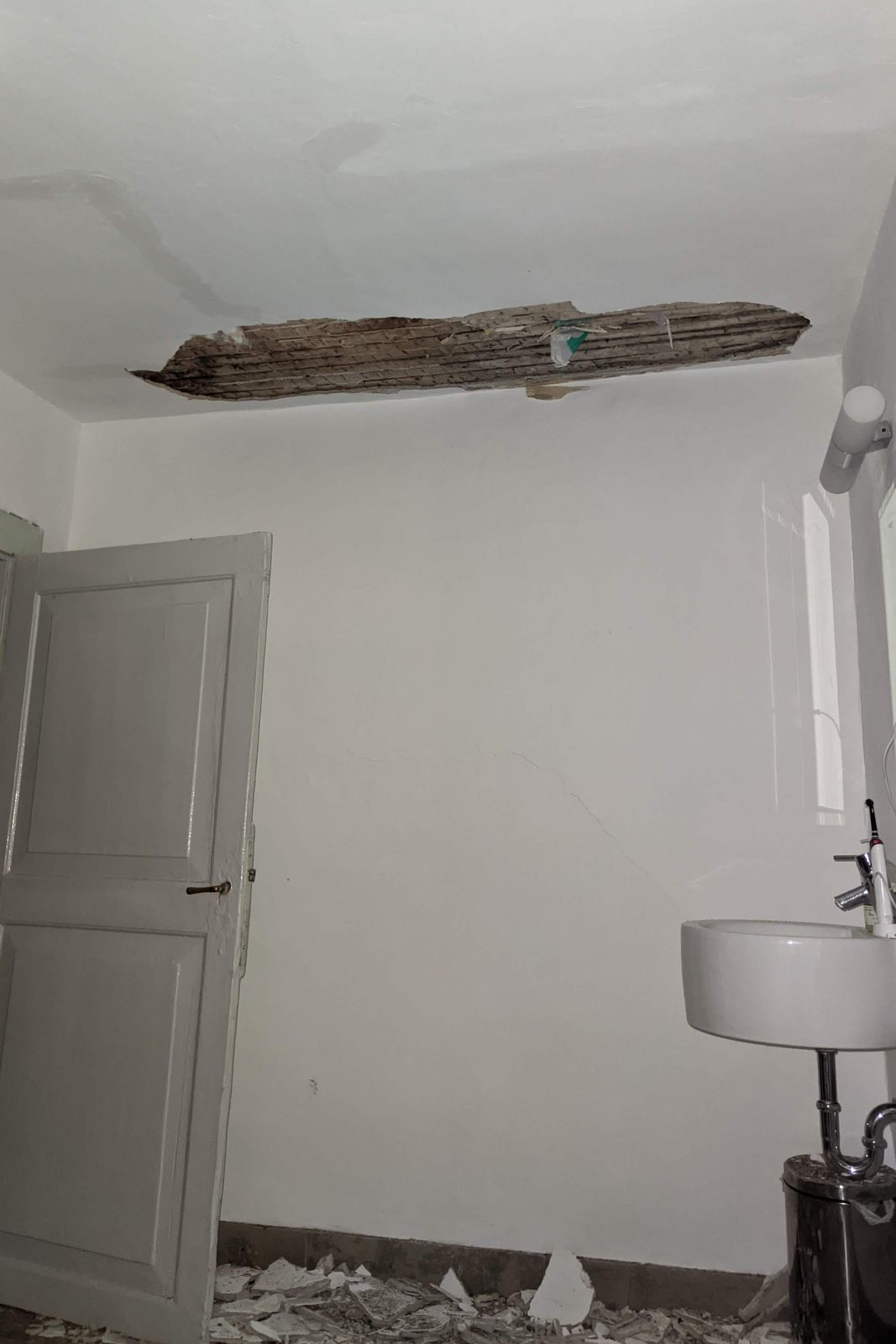
An ordinary inspection, an apartment in the old town of Šibenik. Nothing to report in the living room, nothing in the kitchen. Then the guest bathroom, where about a metre of ceiling was lying on the floor.
There had been a small earthquake: magnitude 3.9, on 4 March 2026, at about half past one in the morning, ten kilometres down and centred close to the town. Not one that makes the news beyond the regional press, and not one anybody would still have been talking about a week later. Nobody was in the flat when it happened. Nobody is, at half past one in the morning in March, which is exactly why this article exists.
The inspection round reached the flat on 6 March. Two days between a ceiling coming down in an empty building and somebody standing in the doorway looking at it.
Why a tremor nobody remembers takes a ceiling down
Look at what is exposed in that photograph. Those are not boards. It is reed matting, nailed across the timber joists and plastered over, the way ceilings were built in these houses long before plasterboard reached the coast. In the old town of Šibenik you will find it above your head in most flats that have not been stripped back and rebuilt.
It is a good construction. It breathes, it takes lime plaster well, and left alone it lasts a century. What holds it up is not adhesion in the way a modern ceiling works: the wet plaster is pressed through the gaps in the reed and forms a lip on the other side. Those thousands of little lips are the key, and the key is what carries the weight.
A hundred years of that key drying out makes it brittle. It does not need much to break it. A tremor far too small to crack a wall is enough to shear the keys along a line, and once a section has lost its hold, the plaster is only being carried by whatever is left around the edges.
That is why this failure is so abrupt. The ceiling does not sag first and warn you. It holds, and holds, and then a strip of it lets go at once.
Croatia sits on an active fault system. Small tremors on this coast are unremarkable. Most owners who live abroad never hear about them at all, because there is nothing to report unless something in your building was already at the end of its life.
The part that fell was not the problem
This is where a careful repair separates from a quick one.
What had already fallen was harmless. It was on the floor. The danger was the plaster still up there: the sections either side of the opening that had lost their key in the same tremor and were being held by nothing but habit.
You cannot see that from below. You have to sound it out: work across the ceiling with a knuckle or the handle of a tool and listen. Sound plaster on reed gives a dull, solid note. Plaster that has lost its key sounds hollow and slightly loose, like tapping on a drum skin.
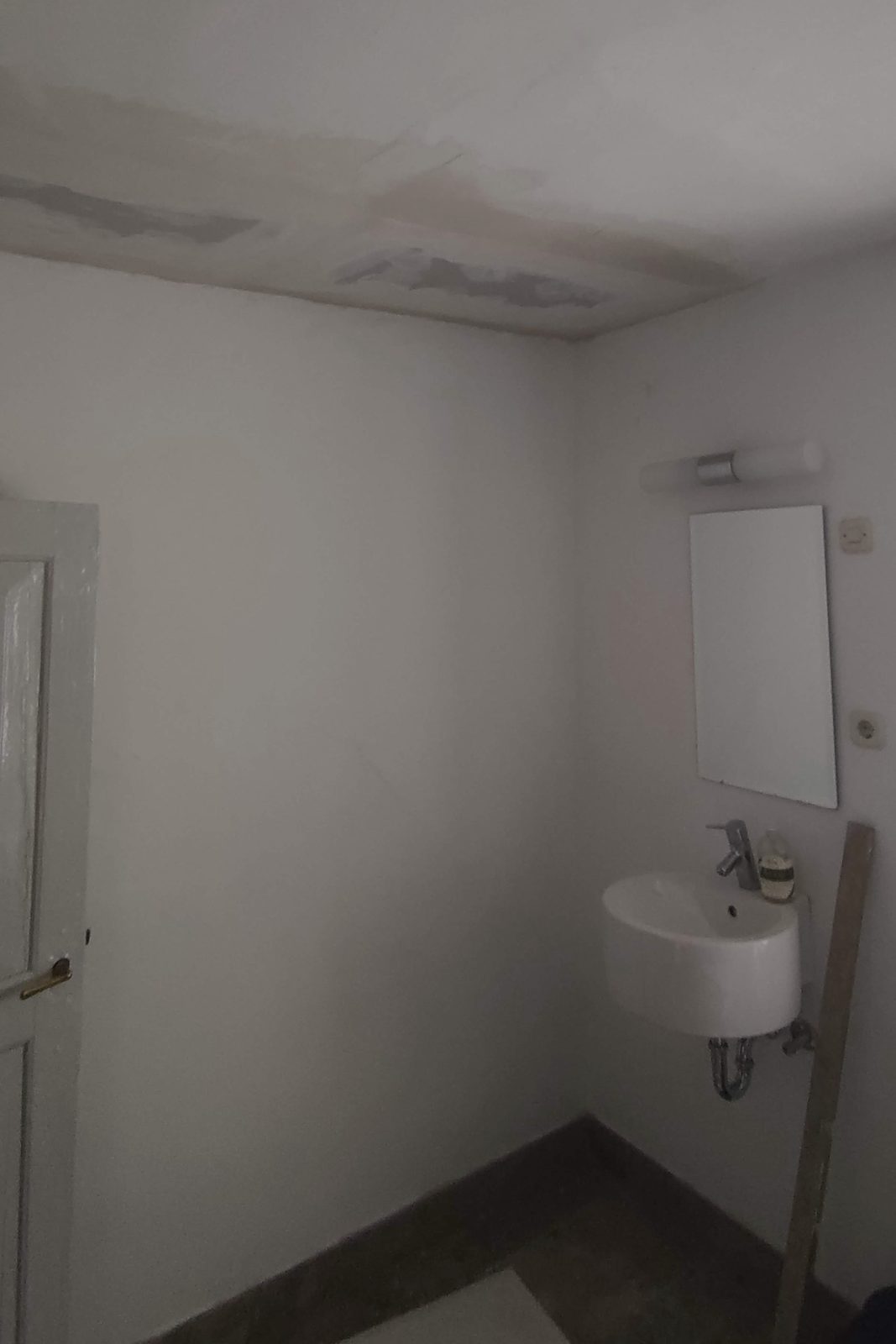
Everything that did not ring solid came down, and that was considerably more than had fallen by itself. Only then was the area made good properly.
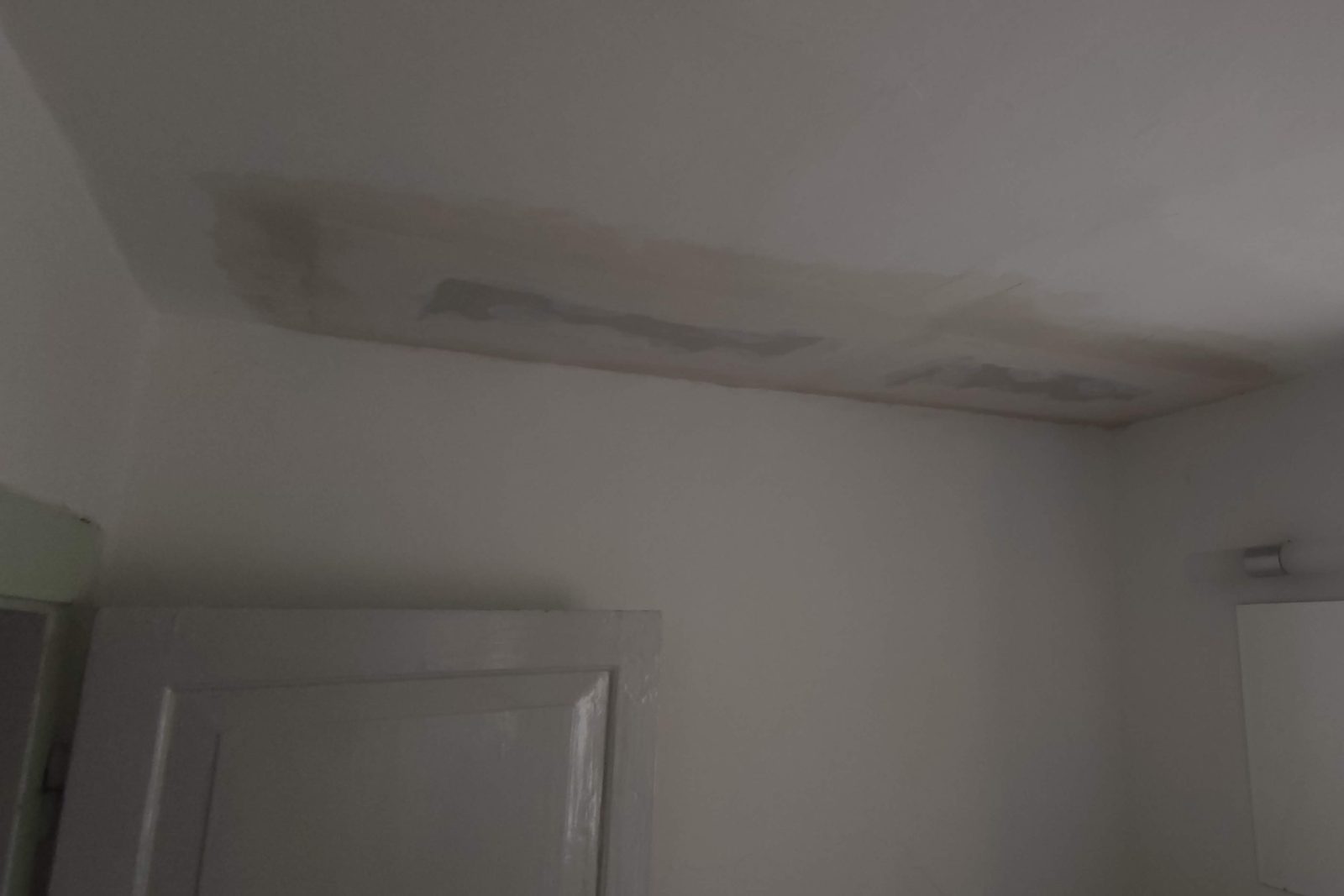
Patching just the hole would have looked finished on the day and left a loaded ceiling over a room where somebody stands at a basin. The next tremor, or the next slammed door, brings the rest down, and by then the flat may well have guests in it.
What owners should take from this
Nobody was going to tell you. No alarm goes off when a ceiling comes down in an empty flat. The neighbours did not hear it through half a metre of stone. Without the March round, the next person through the door would have been the owner or a guest at the start of the season, the debris nearly four months old, a bathroom out of use on the day of arrival, and a plasterer to find in the one stretch of the year when there is not one free on this coast.
Check whether earthquake damage is actually covered. On most Croatian household policies it is not part of the standard cover but a separate extension that has to be taken out deliberately. It is worth knowing which of the two you have before there is anything to claim, not afterwards. If you are not sure, ask your insurer in writing.
Photograph before you clear up. If you or somebody else finds a room in this state, the pictures taken before anything is touched, including the debris where it fell, are the claim. Sweeping up first is the most common and most expensive mistake in this situation.
Look at the other rooms. A tremor does not act on one ceiling. Wherever there is reed-lath plaster in the same flat, it has had the same shake, and it is worth sounding out while somebody is there with a ladder.
How we handle it
Ceilings are part of the ordinary inspection round, not an extra. In old-town flats that means looking up in every room, including the ones nobody uses, and it means the report carries photographs with a date rather than a tick in a box.
When something like this turns up, we clear and secure it, then get quotes and instruct a trade once the owner has agreed. We do not decide on the repair ourselves. What the owner gets in between is a set of pictures of a room they are two countries away from, and a straight answer about what has to happen before the season.
In this case the flat was back in use well before anybody needed it. That is the entire value of turning up when nothing is supposed to be wrong.